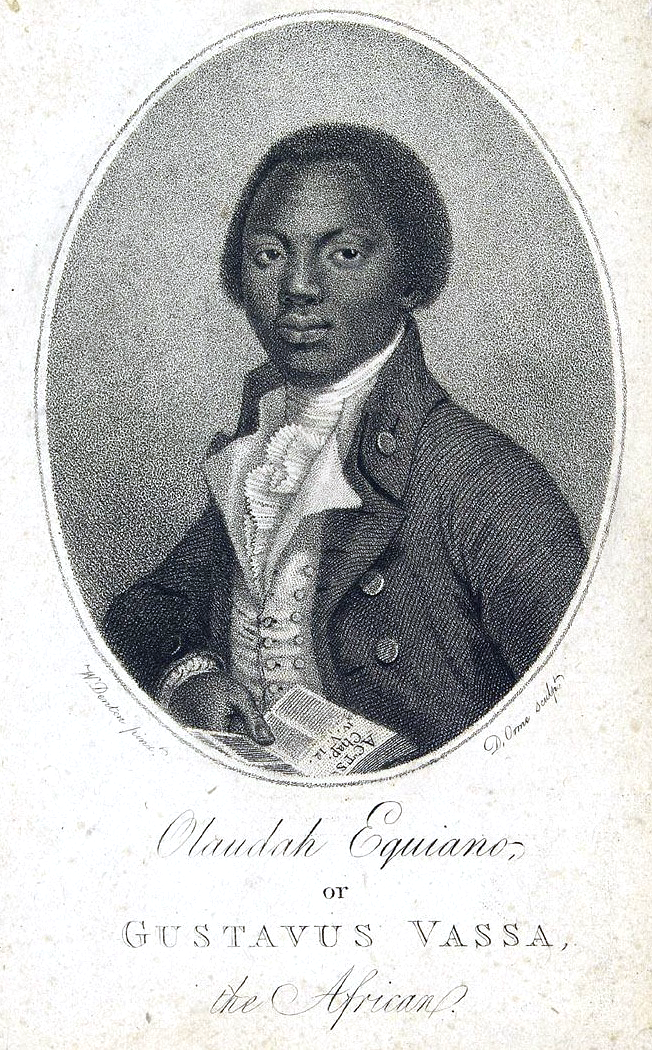
The first part that struck me as interesting had to do with Equiano’s reaction to the indigenous people of the Mosquito Shore as well as the Europeans there. One of the things Equiano says about his time there is “I often wished to leave this place and sail for Europe…living in this heathenish form was very irksome to me” (226). Now even though part of Equiano’s disdain for being in the Mosquito Shore is that, as he has seen over the course of his travels, many of the sailors and people on the island do not adhere very strongly to any form of Christianity (whether they claim to be Christian or not), this particular passage reminded me of a part in Teodros’s song:
“I got friends and family that grew up in the East, cradle of civilization, and raised to believe blonde hair, white skin, and blue eyes is what beauty means”
Again, what Equiano says is not as racially charged as this, and in fact Equiano’s complaints could be more because of his religious views, the song is still linked to Equiano’s quote. As we have discussed, by the time Equiano wrote his narrative, he was a European Christian. What he says about wanting to leave the Mosquito Shore shows that Equiano has bought into the European identity, and sees this as the definition of how to live, just as Teodros laments about people in modern Ethiopia.
The second quote from Equiano’s narrative which I related to Teodros’s song was shortly after Equiano leaves the Mosquito Shore. He is soon threatened to be sold back into slavery, and when he asks how it is possible he can be sold back now, he is tied up and lifted from the ground, left suspended in the air. As Equiano says, “Thus I hung, without any crime committed, and without judge or jury; merely because I was a free man, and could not by the law get any redress from a white person” (228). Again, Equiano does not specifically mention race, but his must be taken into account here. And once more I found a connection with Teodros’s song, where at one point he says “If they call you black, you got the worst prospect…so we reject ourselves” as well as “’Til we were colonized we weren’t even identified by race; now they say it justifies their hate”. As we have discussed in class, part of Equiano’s narrative is that he must prove himself as a European. Though I can’t say he’s come to hate his life in Africa or who he was before becoming a European Christian, part of his appeal to his audience is to show that he has been “Europeanized”. Meanwhile, though, his race still plays a part in how he is treated even when he is free, and even he knows it.
So it may be a stretch, but those are the connections I found between this final reading for Equiano and Gabriel Teodros’s song “In This Together”. It shows just how relevant Equiano’s work still is…or how much I really wanted to put in a shameless plug for a guy from my hometown.
